I have a friend whose daughter is genuinely beautiful. The kind of child strangers instinctively compliment. Big eyes, good bone structure, the whole package. Like many proud parents, she shares photos often, and the comments are almost always the same.
“She’s gorgeous.” “So beautiful.” “She looks like a model.”
My friend beams. Honestly? I’d probably beam too.
But I’ve been thinking about those comments more than I probably should. Not about whether they’re true, they are..but about what a child slowly learns to believe about herself when that’s the song playing on repeat.
Here’s the thing I’m not going to pretend isn’t real: beauty is an advantage. A measurable, documented, sometimes unfair advantage. Psychologists Karen Dion, Ellen Berscheid, and Elaine Walster demonstrated this more than fifty years ago: attractive people are often assumed to be warmer, smarter, and more capable before they’ve even opened their mouths. Economist Daniel Hamermesh later confirmed it in Beauty Pays: pretty people earn more, get hired faster, and generally move through the world with a tailwind the rest of us don’t get. We’ve known this long enough that our stories are built around it. The beautiful girl gets the kingdom. She doesn’t need a plan. She needs cheekbones.
But here’s the distinction I keep coming back to. There’s a difference between a door and a room. A door gets you in. What you do once you’re inside, that’s the actual story.
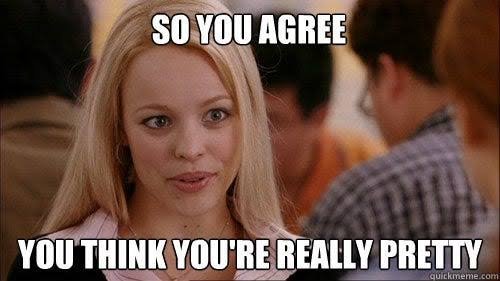
The danger isn’t beauty. The danger is mistaking the door for the destination. Let’s sprinkle a bit of chick flick, Think of Regina George in Mean Girls, a girl who ran an entire school on aesthetic authority alone, which worked brilliantly right up until it didn’t. She had the door. She just never bothered with the room.
I’ve watched this play out in real life too. Some of the people who were effortlessly admired when we were younger coasted on that advantage long enough that they delayed building competence, postponed resilience, confused admiration with achievement. Then one day the advantage wasn’t enough anymore, not because they lacked potential, but because they never discovered how much potential they actually had. Beauty had been carrying too much of the weight. What looked like a gift quietly became a ceiling.
I don’t think most parents intend this. I think we celebrate what the world immediately applauds because it’s easy. Beauty gets a standing ovation on arrival. Character? Character gets politely clapped for at graduation, maybe. Curiosity, discipline, resilience, kindness, integrity. These qualities grow slowly, almost invisibly, and they rarely earn standing ovations. Which means parents often have to become the first audience for them, long before the world notices.
I tell my daughters they’re beautiful. And then I work very hard to make sure that’s not the compliment they hear most often. I want them to know they’re thoughtful, curious, brave, kind, and resilient , because those are the qualities they’ll still be growing long after youth has done what youth inevitably does. When I compliment them, I try to notice the things they chose, not only the things they inherited. “I’m proud of how you handled that.” “That took courage.” “You kept going even when it was difficult.” Because beauty is received. Character is practiced. Children need to hear both, but they need to hear the second one more.
I also put the brakes on when the selfie count starts climbing and the online validation machine starts humming a little too loudly. Jean Twenge’s research on social media and young people found what most of us suspect but don’t want to say out loud: the more adolescents organize their lives around external validation, the more fragile their sense of self becomes. Psychologists Jennifer Crocker and Connie Wolfe called it contingent self-worth. It’s like renting your confidence instead of owning it. As long as the admiration keeps coming, everything feels secure. But confidence built on applause is only as stable as the next silence. And we live in a world where an algorithm will happily tell your daughter she’s beautiful forty times before her morning cereal gets soggy. If that becomes her primary mirror, she may never learn to look for herself anywhere else.
Our Hollywood darling Elle Woods understood this better than she was ever given credit for. She walked into Harvard Law through a door nobody expected her to open, and instead of standing in the doorway waiting for more applause, she built the room. Studied harder. Proved more. Became genuinely undeniable. Bend and snap, yes, but also: show up, do the work, become someone whose value has nothing to do with how she looks.
And before anyone thinks this is just a daughters conversation, Jane Austen already handled the men. She gave us Sir Walter Elliot two centuries ago, a man so captivated by his own appearance and social standing that he neglected the deeper work of becoming someone worth admiring. She wrote him as a cautionary tale. She would not be surprised to find him on Instagram. I’ve seen the same type in real life, the charming, handsome young man who slowly let his best asset replace the harder work of becoming capable, and arrived in middle age wondering why the rooms weren’t opening the way they used to. I tell my son the same thing I tell my daughters. Any strength can become a weakness if it convinces you that you’ve already arrived.
Beauty opens the door. Character decides whether you’re invited to stay. And that’s the part no mirror can build for you.
Love,
Kirana
Leave a Reply